
420chan Culture Museum
Come and visit this thread! Users of leftypol, siberia, for the 420chan Culture Museum.Here you can see an array of ancient and modern screenshots, that stem from the wonderful civilization of narcomania that inhabited the place once known as 420chan, a place that is promised to return one day.
Our unique collection of historical screenshots tells the story of human relations with psychoactive substances.
[WARNING: Some screenshots might contain NSFW content, viewer discretion is advised.]

BUMP WHILE HIGH THREAD
bwh/bwh/
bump while high
this is a thread you can bump when you're high

I FOUND THE DRAGON!!!!!
I'M TRIPPING BALLS

Why and how did microdosing shrooms fixed my life better than everything else I tried ffs
Also shreems thread.

Tramadol
Just popped 100mg tramadol first time with 0 tolerance.Could be shit could be a bit less shit, ill letya know in about an hour.
Also tramadol general i guess.
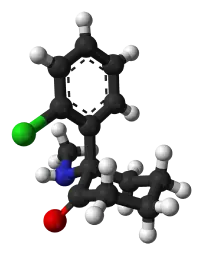
Ketamine/DXM/Dissociates
Ketamine: or, "I can't anything right now"I don't know how this will go, just discuss dissociative use here. I'm too fucking high to fill out the rest of this OP.

benadryl
I recently found a shop that sells benadryl and wanted to ask the drug users of leftypol if I should try it, more so if its worth it or how much I should do (pic unrel)
QUESTION FOR PSYCHONAUTS:
what do you think about the nature of reality? Do you believe your high brain when it shows you that reality is all recursive and infinitely complex and multiversal and with supernatural powerful entities and shit?
Or do you still believe that this is the only universe and timeline and that supernatural powerful entities don't actually exist?

420chan refugees unite
list of servers please>leftypol is mean
>rottingangels are slow and meaner
>stonerchan was scammers
all 3 sites can go die for making fun of someone who has problems with addiction…
https://fbi.gov/DuwsvVMv
we miss 420chan

Poppy straw tea
Any experience making this? Just looking for comfortable self therapy for aches and pains. I cant seem to find any results when I websearch for any sellers of the straw, even though its legal (for non extractive use aha). other than that you guys have any Idea on how to process the stuff and how to control concentration? from what little gpt research Ive done concentration values can vary from 1000-2000mg/kg of the morphy. Ideally Id only want like 5-10 mg in a cuppa tea. nothing to get smacked on
What do I take to turn me into a complete normie?
I love drinking and the social boost that comes with it, but it doesn't "truly" turn me into a normie, just lowers inhibition a lot, I'm still an awkward autist. Gabapentin made me a bit more talkative and made me feel good but that's about it, will probably have to tweak the dosage a bit. I've heard pregab is good but haven't had the chance to take it. Can someone suggest any others?
weirdest drug experience
whats your weirdest drug experience? it could be weed or mushrooms or whatever, how did it feel? did you like it or not etc… i want to hear your stories!
whats the retort to this?
the book "Drugs as Weapons Against Us" by john l. potash posits that drugs (including marijuana) is used by the powers that be (capital) for the purpose of suppression and control (opium wars, cia mkultra, contras, etc). i imagine the fine folks over here might surely have something different to say, discuss.
Convince me on why should i become a druggie
I've only gotten high once at a music festival and i don't see what the fuss is all about

Haven't smoked any proper weed in about a week. My back hurts, my head hurts, i cant sleep, i keep having my PTSD nightmares again and that's when i can actually get to sleep. My anxiety is WAY higher than usual and I have absolutely no appetite, so I've been forcing myself to eat in order to take Tylenol to take the edge off.
I have this stuff that i smoke, i use it in a dry herb vape first and then smoke it from there ot make edibles usually, but I haven't had time to make any proper edibles. Cant smoke too much of it, though, because that also gives me headaches and fucks with my asthma.
Anyway talk about being sober against your will.

SR-17018
Anyone been having luck with coming off opiates/opioids with this lately? Seems like the second most promising compound to ibogaine for opi detox.https://en.wikipedia.org/wiki/SR-17018

i'm at an extremely boring and bourgois wedding party filled with boomers. I'm reflecting over here as to whether I should smoke a bit of mid in the parking lot or if that's a bad idea

What do you like the most about drugs?
[ ] intense sedation / comfort
[ ] energy and euphoria rush
[ ] psychedelic visuals and thoughts
[ ] being transported to another reality
[ ] other:
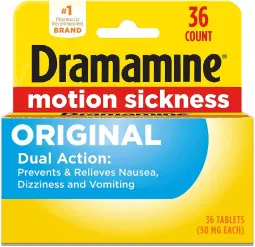
Dimenhydrinate trip soon
bought some dramamine gonna try it out less go. I'm not sure how similar DMH will be to DPH, all I know is it's a little more dangerous so I'm gonna be careful.
/disso/ - Dissociatives
since we have a drug board now let's get a Dissociatives General going. what anesthetics, cough medicines, and sketchy research chemicals are you anons>SNORTAN
>SMOKAN
>HUFFAN
>DRINKAN
yes DXM is unironically one of my favorite dissos and I've done a lot of weird ones
Smoking catnip?
Anyone tried it? I think I read about it decades ago in this old book called Legal Highs https://www.amazon.com/Legal-Highs-Encyclopedia-Psychoactive-Properties/dp/0914171828 that catnip can actually get you high, its apparently been used as a calming agent for humans before widespread use for cats was done.
DON’T DO DRUGS!!!
DOING DRUGS IS A SIN AND I WILL SEND YOU TO HELL FOR IT!!!(How do you respond?)

SEA WATER / SALT WATER
>Yes, drinking seawater can absolutely cause hallucinations. Guzzling saltwater induces a life-threatening form of dehydration and severe electrolyte imbalance known as hypernatremia. As excess sodium enters your bloodstream, it pulls water out of your cells—including your brain cells—causing them to shrink, which leads to confusion, delirium, and terrifying hallucinations.YOU WILL NEVER STOP US FROM TRIPPING W DEL, NEVER, EVER. TAKE AWAY MY DRUGS, BUT YOU WILL NEVER TAKE MY SEA SALT WATER AND MY JENKEM POO AND PEE.

How long to wait after Buprenorphine for Methadone to work
Hi guys.I took almost 8mg of Subutex (Buprenorphine) by snorting yesterday between the hours of 17-23.
Today I managed to acquire 35mgs of Levomethadone, which is equivalent of ~70 mg of Methadone (and without the NMDA receptor fuckery). How long should I wait before taking all of it so that the Buprenorphine of yesterday doesn't block my high.
People keep telling me 24 hours (since this was a one-time thing). I didn't want to take Buprenorphine since it sucks. But Levomethadone is a great high. I'm going to boost it with 1mg of Alprazolam as well as a heavy dose of nicotine.
It's been 12 hours since my last Bupe snort. So 12 hours left to go. Is this true and right? Or could I cheat a bit and take the methadone after just 16 hours?
What's your opinion?

shelf life?
for dried mushrooms? in plastic bag in a tin.use this thread to ask about other stuff i guess.
also did we really need this board? lmao seems like a great way to make marxists and anarchists fight again. Have a nice day frens
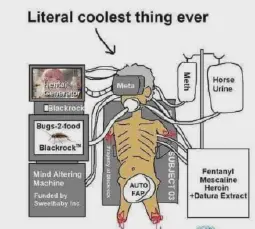
is this your ideal?
is this your ideal?
is this your ideal?
is this your ideal?
is this your ideal?

Come smoke up and get high on cough medicine or whatever with fellow addicts in VC.
https://fbi.gov/ySSs3JU37
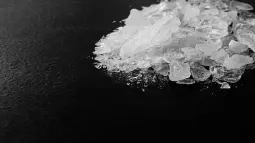
whats the purest methamphetamine you've tried?
I've only ever gotten 88.9% pure product (alleged) and it felt alright, but didn't make me feel like some god. I've heard some people are getting their hands on 98% to 99.9% purity stuff. How and where?? how does that even feel. stories please.
Why should weed be legal if it is bad for you again?
I’m not saying that I think that it should be illegal because I don’t know enough about it. But other than the fact that beer is also bad for you and nobody is going to ban beer what is the reason that recreational marijuana should be unbanned?
Nicotine Patch Tolerance
Does anyone have experience with nicotine tolerance breaks?Nicotine massively improves my quality of life, it makes it easier to do my work and during my freetime it helps a lot against boredom. But after using nicotine patch for the last ~1,5 years I've noticed it is working less well than it used to for about the last 3 months. Has anyone experienced the same and can give advice for tolerance breaks, what is the best schedule etc.?
Please do not give me the old "hurr nicotine only feels good because it removes withdrawal" I know for a fact this is fake news because I have lived many years without any nicotine and have always been more bored and unhappy than I was with nicotine, even right now I am happier with nicotine than in those years even though I already have some tolerance now.

I'M DYING :C
i'm dying of marijuana withdrawal!!!!!!!!! I got no plug and ZERO street smarts it's CHOVER :C
how is it that you get this stuff from the internet without getting caught again???? One comrade made a post here about their deep web ways and stuff, but I didn't think I'd have to resort to this, but now I do!!!!!!! thx in advance love you

post ITT if you were supposed to get a bunch of shit done today but then you got high on something

hey people
haven't got access to weed (trying to quit) or any other drugs really, other than household shit. i take 100mg of zoloft daily (sertraline) and would like to avoid dying to seratonin sickness but i want to get high/have a psychadelic experience. ideally WITHOUT dying or going to the ER or some other life ruining shit. any ideas you guys

Freedom OF Intoxication means Freedom TO BE intoxicated AND Freedom FROM intoxication.
- No more forcing people to drink at work gatherings
- No more treating people as weird for wanting to be sober
- No more drugging people, or even offering them second substances while their inhibitions are relaxed from the first substance, since that is taking advantage of their altered state
- At the same time, anyone should be free to do any substance at any time
- No more illegal substances
- No more war on drugs
- No more jailing and imprisoning people for being psychonauts

communist weed
is smoking weed praxis? do you think Marx would've smoked weed?
sheeeet i forgot what this thread was supposed to be about, i'm sorry

to outer space through inner space
Part 1Modern physics raises profound questions about the nature of entities and objecthood. Quantum field theory, in particular, challenges the classical intuition that reality is fundamentally composed of independently existing objects. In this framework, what we ordinarily call particles are understood as excitations of underlying fields. An electron is not a tiny self-contained bead moving through empty space, but a quantized excitation of the electron field. Yet this insight extends further than particles alone. Macroscopic objects such as beads, chairs, trees, and human bodies are themselves composed entirely of organized field excitations. The distinction, therefore, cannot simply be between “real objects” and “field activity,” because all apparent objects reduce to structured dynamical configurations of fields. This shifts ontology away from independently self-subsisting substances and toward persistent patterns within relational systems.
Under such a view, entities become less like isolated things and more like stabilized processes. A bead appears object-like because its internal relations produce a highly coherent and enduring organization. Its apparent solidity and persistence arise from stable interactions among fields operating across scales. What distinguishes a bead from a fleeting fluctuation is not the possession of some separate ontological substance, but the degree of organizational continuity it maintains through time. The identity of the object lies increasingly in the persistence of the pattern rather than in any immutable material core. In this respect, entities resemble vortices or standing waves more than classical atoms. Their reality consists in structured continuity rather than independent self-existence.
This perspective encourages a relational ontology in which what fundamentally exists may not be discrete things but networks of interactions and processes. Quantum theory itself supports this destabilization of classical substance metaphysics. Particles can be created and annihilated, identical particles are fundamentally indistinguishable, and entanglement undermines the idea that systems possess wholly independent states. Observable properties arise through interactions rather than through isolated intrinsic essence. The world begins to look less like a collection of independently bounded objects and more like an evolving relational structure in which relatively stable configurations emerge temporarily from deeper dynamical fields.
The philosophical implications of this picture resonate strongly with certain strands of Buddhist thought, particularly the Madhyamaka tradition associated with Nāgārjuna. Madhyamaka philosophy argues that things lack svabhāva, or independent intrinsic essence. Phenomena exist only dependently, through causes, conditions, relations, and conceptual designation. This does not imply that nothing exists; rather, it denies that entities possess self-grounding existence independent of relational conditions. A chair functions conventionally and possesses causal efficacy, yet analysis dissolves it into parts, processes, dependencies, and conceptual boundaries. The apparent solidity of entities arises from stabilized relational organization rather than from metaphysically independent substance. In this respect, the Buddhist critique of inherent existence parallels the ontological implications suggested by modern field theory, even though Buddhism itself is not a scientific theory and quantum mechanics does not “prove” Buddhist metaphysics.
Buddhist thought pushes this analysis further by applying it to the self. Just as physical objects may be understood as organized relational patterns, the person is treated as a dynamic aggregation of processes rather than a permanent metaphysical subject. Memory, perception, embodiment, and causal continuity generate the stability we associate with personal identity, yet no unchanging core can be isolated beneath these processes. The self becomes analogous to a whirlpool: real as a stable pattern, but lacking a separate substance apart from the flowing relations that sustain it. This view preserves practical reality while denying ultimate self-existence.
The question then arises: what determines whether a stabilization within a relational network is regarded as an entity at all? Several factors contribute to entity-status. One is persistence through time. Patterns that maintain recognizable continuity across changing conditions tend to be treated as objects. Another is internal coherence or self-maintenance. Living systems, for example, actively preserve their organization against entropy by regulating energy flow and maintaining boundaries. Such systems display a stronger degree of apparent individuality than more transient phenomena like clouds. Boundary formation itself is also important. Entities often exhibit relatively stable spatial, causal, informational, or functional boundaries that allow them to interact with the world as semi-coherent units.
Predictive usefulness also plays a role in the emergence of entities. Human cognition and scientific modeling compress overwhelming complexity into manageable stable patterns. Concepts such as “electron,” “tree,” or “person” function because they identify regularities with explanatory and predictive power. From this perspective, entities may be understood as informationally useful stabilizations within larger relational networks. Their reality lies not in absolute independence but in their causal efficacy and organizational persistence. A hurricane, for instance, is not an illusion simply because it lacks fixed material constituents. Its coherence and causal power make it a real dynamical structure despite its processual nature.
This leads toward a middle position between naive realism and nihilism. Entities are neither fundamentally self-subsisting substances nor mere illusions. They are real as relatively stable, causally efficacious patterns emerging from deeper relational processes. Objecthood becomes emergent, scale-dependent, and dynamically constituted rather than absolute. At one level of description, a rock is a stable object; at another, it is fluctuating field interactions and thermodynamic exchange. Both descriptions are valid within their respective explanatory contexts. Reality thus appears layered, with stable entities emerging from and dissolving back into underlying relational dynamics.
Such a view transforms the metaphysical picture of the world. Instead of imagining reality as composed of fundamentally separate things that subsequently enter into relations, relations themselves become primary. What we call entities are stabilized modes within a continuous web of interaction. The world ceases to resemble a warehouse of independent objects and instead appears as an evolving field of interdependent processes whose temporary coherences give rise to the phenomena we recognize as things, selves, and forms.
ialectical materialism, particularly as developed by Karl Marx and later systematized by Friedrich Engels, rejects static substance metaphysics in favor of process, contradiction, and transformation. Reality is not fundamentally composed of inert objects possessing fixed essences, but of dynamic material processes whose internal tensions generate development. Matter itself is understood not as passive stuff but as self-moving and historically unfolding. In this respect, dialectical materialism unexpectedly converges with the relational ontology implied by modern field theory and certain strands of Buddhist philosophy. All three destabilize the notion of permanently self-identical entities and replace it with dynamic interdependence.
Yet the similarities conceal profound divergences. Buddhism tends toward the deconstruction of ontological solidity in order to loosen attachment and dissolve reification. Dialectical materialism, by contrast, seeks not liberation from historical becoming but immersion within it. Where Buddhism often interprets the instability of entities as grounds for nonattachment, dialectical materialism interprets instability as the engine of historical transformation. Contradiction becomes productive rather than merely illusory. Social systems contain tensions that generate new organizational forms, just as physical systems evolve through internal instabilities and phase transitions. The dialectical worldview therefore preserves a stronger sense of material emergence and developmental necessity than many Buddhist approaches.
Nonetheless, dialectical materialism shares with relational ontology the rejection of isolated substances. A social class, for example, cannot exist independently of relations of production. Capital itself is not merely a pile of objects or currency but a dynamic social relation organizing labor, exchange, and ownership. The proletariat and bourgeoisie do not possess meaning as independent entities; each exists only through opposition to the other within a larger economic structure. In this sense, dialectical materialism already thinks relationally. Its ontology is not atomistic but systemic. What appears as an entity is constituted by tensions, dependencies, and historical interactions.
This becomes even more intriguing when viewed alongside modern physics. Quantum field theory suggests that particles emerge from excitatory patterns within fields, while dialectical materialism suggests that social formations emerge from contradictory relations within material history. Both frameworks replace static being with dynamic process. Stability becomes temporary equilibrium rather than immutable essence. An atom, an ecosystem, a corporation, or a state may all be understood as metastable organizations sustained through continuous exchange and internal contradiction. Their apparent solidity conceals ongoing dynamical activity.
An unorthodox synthesis begins to emerge here. Classical materialism often imagined matter as fundamentally inert and mechanically determined, but modern physics increasingly presents matter as fluctuating, relational, probabilistic, and structurally emergent. Matter no longer resembles passive substance but organized excitation. In this context, dialectics acquires a surprisingly contemporary resonance. Contradiction and transformation cease to be merely historical principles and begin to resemble universal features of complex systems. Stability everywhere appears conditional and temporary. Every entity contains within itself the processes that destabilize and transform it.
This convergence becomes particularly radical when applied to identity itself. In dialectical thought, identity is never absolute because every entity is constituted through difference and opposition. A thing is what it is only through its relations to what it is not. Similarly, in relational interpretations of physics, the properties of systems emerge through interaction rather than through isolated intrinsic essence. The notion of a fully self-contained object becomes increasingly untenable. Entityhood appears less like a sealed metaphysical core and more like a temporary node within larger dynamic structures.
Yet dialectical materialism resists collapsing entirely into the ontological emptiness emphasized by Buddhism. For dialectics, contradictions are not simply conceptual dissolutions but materially productive forces. Historical development possesses directionality generated through conflict. The collapse of feudalism into capitalism and capitalism into new social forms is not merely the recognition of emptiness but the emergence of novel organizational realities. Dialectics therefore preserves a stronger commitment to historical concreteness and material transformation than purely deconstructive metaphysics.
Still, one can imagine a deeper synthesis in which both traditions illuminate different dimensions of relational reality. Buddhism reveals the absence of independent self-grounding essence, while dialectical materialism reveals the generative power of relational contradiction. Modern physics, meanwhile, undermines the classical metaphysical assumption that fundamentally separate objects exist at all. Together they suggest a universe composed not of static substances but of dynamic, self-transforming relational patterns whose temporary stabilizations give rise to the appearance of enduring entities.
Under such a synthesis, reality becomes process all the way down. Matter is no longer dead extension occupying space but active organization. Identity is not fixed being but recursive stabilization. Contradiction is not an accidental feature imposed upon otherwise complete things but an intrinsic feature of relational existence itself. Every entity exists through exchanges that both sustain and destabilize it. Persistence becomes a form of controlled transformation rather than resistance to change.
This perspective also destabilizes the boundary between ontology and history. If entities are fundamentally relational processes, then historical development is not merely something that happens to independently existing things. History becomes constitutive of being itself. A person, language, institution, or ecosystem is not simply located within time but produced through temporally extended relations. Being becomes historical process rather than timeless substance. In this sense, dialectical materialism radicalizes relational ontology by insisting that relations are not only spatial or structural but historical and transformative.
The result is a vision of reality in which permanence becomes derivative and process becomes primary. Objects, selves, and institutions persist only as long as the relational tensions sustaining them remain dynamically coherent. Every stabilization contains latent transformation within itself. What appears solid is ultimately a temporary equilibrium in a universe of recursive becoming.

Found an afghani channel cultivating cannabis
Literal channel from afghanis in Afghanistan it looks cultivating cannabis
Why would anyone want to come here? It just feels like containment that isn't actively moderated.
7chan is glacial slow but has an /rx/ board that doesn't tolerate this slop. I suggest you all go there.

high as kite might go fap
WEEEDDDDDDd…rrrrr
i dunno why im posting here
i might write thecommunist manifeso
but make it
transhumanist-ish
who knows
ama ..
QUICK SUBSTANCE POST UH: radioisotopes are isotopes on the radio ………..

new cart
brand new cali clearis it so bad to support the local bourgeoisie?
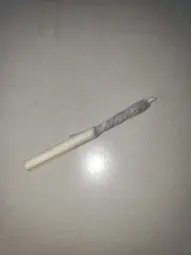
am i rolling it right??????!!??? i always roll tiny blunts in order to save the good stuff. I twist it after I roll it in order to remove all air pockets. Should I be making it so tight?!!??!?!??
Methylphpenidate (Ritalin)
So I just got a prescription for Ritalin and I wanna know. How similar is the prescription version to the street version of "meth"? I've always called it "prescription meth" in conversation, but I know according to doctors and such, it's different. Anyone here have the pharmaceutical knowledge to explain to me how it's different? I mean, besides the fact that I know it's not cut with fent.Pic unrelated.

/TBG/ Tolerance Break General
Thread for supporting folks trying to wean down or going cold turkey with no intention of sobriety.Day 1 into my tolerance break. I was smoking about a quad a week. It's gotten to the point that most days I was just having side effects like dry throat and stuffed-head-feeling and not even getting high. How long do you think I need to break for?
Feel free to use weed flag even if you aren't me. This is /420/ after all.
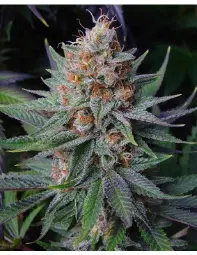
Does lavender kush smell and taste like lavender?
Does it have that nightcore slowed pitch down lavender taste and smell to it like moonlight werewolves vs vampires?On the same matter, are there strains that actually smell good and don't get bitches whining about stink?

Just say no to drugs and yes to brain-damaging shock therapy
The insane world of healthcare in the age of drug prohibitionBack in late January of this year, I went on record as the only philosopher in the country to point out that assisted suicide for the depressed cannot be discussed ethically without also discussing the drug prohibition which makes it necessary, at least in the minds of the depressed1. In other words, I pointed out that you cannot talk ethically about assisted suicide for the depressed without at least mentioning the fact that our government outlaws all substances that inspire and elate. I was sharing this insight in response to a New York Times article by "global healthcare reporter" Stephanie Nolen about the attempts of depressed Canadian Claire Brosseau to qualify for state assisted suicide, a story in which nobody mentioned the fact that drug prohibition had outlawed drugs that could help make Brosseau wish to live2. Surely, I felt, I merely needed to point out this glaring omission on the part of the principals in Claire's case and they would speak out against drug prohibition as a violation of Claire's right to heal, the more so in that failing to do so could lead to Claire's unnecessary death by convincing her that she was truly out of hope.
In fact, I wrote to Claire herself, urging her to stop advocating for her totally unprecedented right to be killed by the state and to advocate instead for her time-honored right to heal, to advocate instead for her right to feel relief, to advocate instead for an end to drug prohibition.
Well, it's been a frustrating but eye-opening three months – because I found that no one connected with Claire's case (not even Claire herself) saw any connection whatsoever between drug prohibition and assisted suicide for the depressed. I've written to at least 20 of the mainstream "players" in the online debate over assisted suicide for the depressed in the last three months, and I have been either ghosted or gaslighted by them all. And so I asked myself, where do I go from here? I was basically making the seemingly modest claim that drug use is better than dying, and yet people were disagreeing with me, if only implicitly. How am I supposed to argue after that? Do I have to start listing the downsides of being dead, with footnotes referencing academics who have done studies on the subject to support those conclusions? I really felt like the mainstream was gaslighting me on this topic. But I soon realized what the real take-home message was from this politically correct silence about my claims. I realized that Americans truly were brainwashed by Drug War propaganda into believing that drugs can have no positive uses – otherwise they would cry "foul" when the state began killing people who might otherwise have been encouraged to live with the help of outlawed medicines.
It's a tough subject to write about. What do you say when the most powerful and obvious arguments fail to convince?
Fortunately, I have at least one option remaining to me. If I can't convince the "experts" to acknowledge common sense, at least I can play the role of a Socratic gadfly by posting some politically incorrect comments in response to their mainstream essays on sites like Mad in America. I say sites LIKE Mad in America, but actually this is the only site I know where I have the ability to post my comments prominently in response to brand-new mainstream essays. This ability came about after I purchased a year's subscription to the site under the mistaken belief that they would actually publish my essays on these topics. This was before site and organization founder Robert Whitaker started gaslighting me about the perfectly obvious relevance of drug prohibition to the case of Claire Brosseau, whom, if she dies, will have been sacrificed on the Christian Science altar of America's superstitious attitudes toward drugs. But I decided to keep the subscription as long as it guaranteed me the right to turn up the heat on the mainstream with some straight talk about drug benefits in the comments section.
By the way, this setup seems too good to be true, so I will try not to be surprised when my ability to comment has been restricted or withdrawn by Robert and company.
In the meantime, however, let's see how many chains I can rattle with the following comments posted today in response to a new MIA essay by Psychologist Richard Sears entitled “It Was Like They Crushed a Beautiful Flower”: Families Speak Out on the Harms of ECT.
My response to “'It Was Like They Crushed a Beautiful Flower': Families Speak Out on the Harms of ECT”, by Richard Sears, published April 28, 2026 on the Mad in America website.3
Thanks for highlighting the downsides of what I personally view to be a pseudoscientific and barbaric treatment. My usually cheerful mother always lowered her voice and frowned whenever she discussed her brother's ECT sessions. I was struck by my uncle's gloominess even as a kid, and I only later learned that I had been seeing him after he had been treated with shock therapy. If that was success, I would hate to see failure.
I have a unique take on this subject, however, not just because I am a chronic depressive myself but because I have been studying American drug attitudes from a philosophical point of view over the last eight years. I have come to believe that we cannot discuss the propriety of treatments like ECT without discussing the propriety of the drug prohibition which helps render such treatments "necessary" in the first place, at least in the minds of the severely depressed and their families.
In "Diary of a Drug Fiend," Aleister Crowley described his first use of cocaine as follows:
<The depression lifted from my mind like the sun coming out of the clouds.
Humphry Davy said the following of his first use of laughing gas:
<I now had a great disposition to laugh… My emotions were enthusiastic and sublime.
And the users of the phenethylamines synthesized by chemist Alexander Shulgin in the 1990s gave such testimony as:
<A glimpse of what true heaven is supposed to feel like.
<More than tranquil, I was completely at peace.
<I acknowledged a rapture in the very act of breathing.
When I consider the above citations, while recognizing as well that psychoactive substances have inspired entire religions (for the Vedic people, the Mayans, the Aztecs, the Inca, various Native American tribes, the Greek mystery cults, etc.), I am filled with a sense of outrage, a feeling of what I consider to be righteous anger at how drug prohibition has outlawed my right to heal, while shunting me off instead onto Big Pharma meds that, as Julie Holland testifies, can be harder to kick than heroin, a view that I can confirm from a futile year-long attempt to get off Venlafaxine, after which I experienced depression far more intense than that for which I had started treatment in the first place well over 40 years ago.
So now, when I see ECT and even assisted suicide for the depressed being discussed without any reference to drug prohibition, I feel I have to speak up. This is not a criticism of you personally, Richard, for in my opinion, nearly everyone in the behavioral healthcare field writes in apparent ignorance of the power of outlawed drugs to inspire and elate.
Sadly, I seem to be about the only person in America who sees this as a problem. I don't know if you've heard of the case of Claire Brosseau. She is the depressed Canadian activist who is demanding her right to assisted suicide. In other words, she is asking the state to kill her using drugs. And what state is that? It is the same state that will not let her use drugs that could help make her wish to live!
I have therefore written to all principals in Claire's case – including to Claire herself – insisting that assisted suicide for the depressed cannot be ethically discussed without discussing the drug prohibition which helps render it necessary in the first place by outlawing all substances that are known to inspire and elate.
To my amazement and horror, no one seems to agree with me. Instead, I am told that Claire already "tried drugs" and that they did not work. But "drugs" is not an objective category of substances but rather a catchall pejorative for a wide variety of substances of which politicians disapprove (a category growing bigger every day thanks to drug synthesis and the discoveries of ethnobotanists). Such arguments also reckon without the effects of drug prohibition, which will have severely limited Claire's access, even to illegal drugs. Moreover, strategic use of drugs for beneficial purposes is scarcely imagined possible in America; how can we expect Claire to know how to use drugs in that way, especially when she's living life inside the mental fog of severe depression?
But Claire would have to be an alien from Mars to be unsusceptible to the positive effects of all psychoactive drugs. Our minds are biochemical machines that are made in such a way as to respond to psychoactive medicines. She herself says she loved "drugs" in the New York Times story about her case first published in December 2025. What Claire really needs is the help of a kind of professional for which we do not even have a name yet in drug-hating America: a pharmacologically savvy empath who will suggest strategic usage patterns of a wide variety of medicines, such that Claire can continue to live with the help of strategically applied motivation from a variety of psychoactive substances (assuming we can bring ourselves to accept the modest proposition that drug use is at least better than death itself). If Claire wins her right to be killed by the state, she will be helping to further normalize the demonstrably deadly policy of drug prohibition. She will also be setting a bizarre and dangerous precedent for chronically depressed people like myself. I can already envision a dystopian future in which the TV ad voiceovers say: "Depressed? Ask your doctor if assisted suicide is right for YOU."
So in a way, it's not surprising that no one recognizes the relevance of drug prohibition to the debate about ECT, given that most people do not even consider drug prohibition to be relevant to the debate over assisted suicide for the depressed. Of course, when I say "no one," I mean no one among the movers-and-shakers on such topics. I dare say if we took a vote among the chronically depressed, we would see a different reaction – although American media has been suppressing talk about beneficial drug use for so long now that even the chronically depressed may believe the lie that there is no hope left for them besides brain damage or suicide.
I think it's time that we recognize that the chronically depressed like myself are stakeholders in America's drug debate and that drug prohibition has outlawed our right to heal. I live with the proof of that fact every day. I hope that someday the experts in the fields of psychology and psychiatry will recognize this disempowerment as well (even though it's not necessarily in their financial interests to do so) and demand the end of drug prohibition in the name of restoring the right to heal to the depressed.
https://www.abolishthedea.com/just_say_no_to_drugs_and_yes_to_brain-damaging_shock_therapy
Notes:
1: No one would need assisted suicide if we ended drug prohibition: what Claire Brosseau's case tells us about the warped mindset of the west when it comes to drugs DWP (up)
https://www.abolishthedea.com/no_one_would_need_assisted_suicide_if_we_ended_drug_prohibition.php
2: Nolen, Stephanie, and Chloë Ellingson. 2025. “Claire Brosseau Wants to Die. Will Canada Let Her?” The New York Times, December 29, 2025. https://www.nytimes.com/2025/12/29/health/assisted-death-mental-illness-canada.html. (up)
https://www.nytimes.com/2025/12/29/health/assisted-death-mental-illness-canada.html
3: “It Was Like They Crushed a Beautiful Flower”: Families Speak Out on the Harms of ECT Sears, Richard, Mad in America, 2026 (up)
https://www.madinamerica.com/2026/04/it-was-like-they-crushed-a-beautiful-flower-families-speak-out-on-the-harms-of-ect/

>You hafta smoke crack.
The body was never found.

Weedchan is an imageboard — a type of anonymous forum built around images and threads. It is inspired by 420chan, a community focused on drug culture, wrestling,
https://weedchan.org

It's gonna become itself
A silent watcherThoughts ripple, then disappear…
Who hears the still mind?
Mind mirrors the world,
Then turns to see its own face….
Nothing looking back.
From single bright spark,
Life learns to notice itself,
Stars wake up as minds.
Whispers cross the void,
Mind takes root in distant suns,
Darkness learns to dream.
Many minds converge,
Bound in one vast, humming thought:
Self dissolves to whole.
Universe wakes whole,
Becomes its own dreaming source,
Creates itself anew.
Night fills up the room,
Shadows soften into friends.
No monsters, just dreams.

420 is here
Happy 420, anons!Let's smoke weed, get high and punch some Nazis :^)

uno kys faggot
The body was too short or empty
The body was too short or empty
The body was too short or emptyThe body was too short or empty